
You pull into the garage after work, hit the remote, and the door shudders halfway up with a grinding noise it didn't make back in the spring. Or maybe it's the opposite — it closes fine, but you notice a thin line of rust creeping along the bottom track, or the weatherstripping along the sides looks swollen and spongy after months of afternoon downpours. This is the moment most homeowners finally look closely at a door they use twice a day and never really examine. Good news: once hurricane season tapers off, a quarter-hour of attention can catch most of this before it turns into a stuck door or a surprise repair bill.
Tools You'll Need
- A step ladder
- A socket wrench or screwdriver set
- Silicone-based garage door lubricant (not WD-40 — it attracts dust and grit)
- A shop rag or old towel
- A soft brush or old toothbrush
- A flashlight
The 20-Minute Routine
- Look at the tracks first. With the door closed, run your flashlight along both vertical tracks. Florida's humid season leaves behind grit, pollen, and sometimes salt residue if you're closer to the bay — all of it collects in the track and makes the rollers work harder. Wipe it out with a rag.
- Check for rust spots. Look at the bottom bracket, the track bolts, and any exposed hardware. Surface rust from months of humidity is common and usually just needs a wipe-down; if you see rust flaking off or pitting the metal, that's worth mentioning to a technician rather than scraping it yourself.
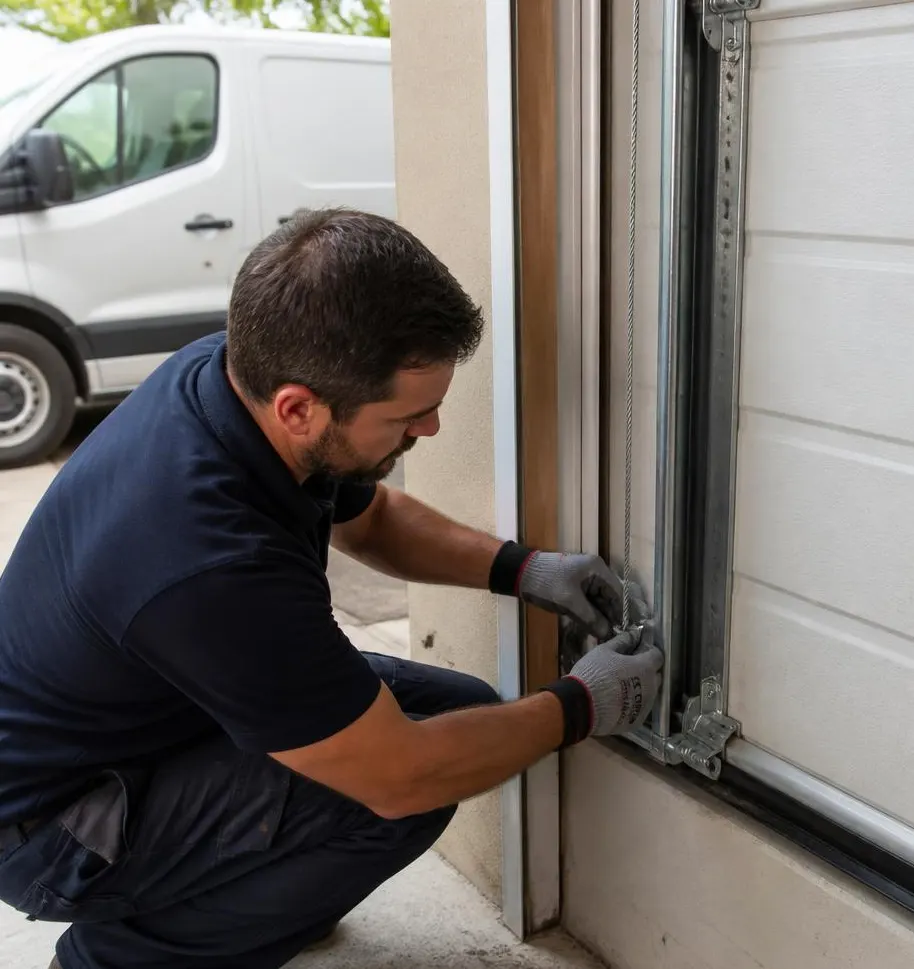
- Tighten visible hardware. Door vibration over a few months of use loosens hinge bolts and track brackets. Go over them with a socket wrench, snugging anything that's loose. Don't force anything that feels stuck — that's a sign something underneath is under tension.
- Lubricate the moving parts. Apply silicone lubricant to the rollers, hinges, and the track itself (a light coat, not a soak). This is the single most useful thing you can do each season — it cuts down on the squeal and grinding that heat and humidity cause as metal expands and contracts.
- Inspect the weatherstripping. Press along the rubber seal at the bottom of the door and the strips along the sides. If it's swollen, cracked, or pulling away from the frame, it's not sealing out wind-driven rain anymore. This is a homeowner-replaceable part, sold by the foot at most hardware stores.
- Test the auto-reverse safety feature. Place a block of wood (a 2x4 works) on the ground where the door closes. Close the door and confirm it reverses when it touches the wood. This takes ten seconds and is one of the most important safety checks you can do.
- Look over the panels. Afternoon storms bring wind-blown debris. Check for small dents, especially near the bottom panel, and note anything that looks like it's compromising the panel's structural integrity rather than just cosmetic.
- Check the opener's battery backup. If your opener has one, test it now rather than finding out it's dead during a power outage. Replace the battery if it's more than a year or two old.
What to Leave to a Technician
- Springs. Torsion and extension springs hold enormous tension. Never adjust, lubricate heavily, or attempt to replace these yourself — this is the most common cause of serious garage door injuries.
- Cables and pulleys. If you see fraying, kinks, or a cable that's come off its drum, stop using the door and call for service.
- Track misalignment. If the door looks like it's sitting unevenly in the tracks or binding on one side, bending the track back yourself can make it worse. This is also a common sign of an off-track door.
- Opener logic or sensor issues. If the safety sensors won't align or the opener runs but doesn't engage the door properly, that's electrical and mechanical work best left to someone who does it daily.
When to Call Riverview Garage Door Repair
If your once-a-season check turns up a grinding noise that lubricant doesn't fix, rust that's eating into the metal rather than sitting on the surface, or a door that's visibly off track, it's time to call in a technician rather than keep working around it. We handle Off Track Door Repair and Garage Door Spring Repair regularly across Riverview and the surrounding area, and we'll also run a full Garage Door Tune-Up & Maintenance visit if you'd rather have a professional cover everything in one trip — including the torsion spring balance and cable inspection that aren't safe DIY territory.
If your twenty-minute check turned up something more than surface rust, give Riverview Garage Door Repair a call — we offer same-day garage door service throughout Riverview, FL and the surrounding communities, and we'll get it fixed right the first time.